IDEAS: Government urged to reduce regulations for e-hailing and taxis
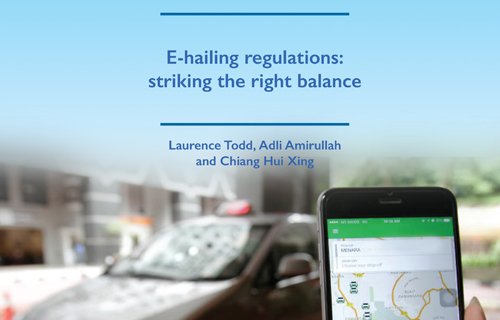
29 November, Kuala Lumpur –Today IDEAS has published a Policy paper titled “E-Hailing Regulations: striking the right balance”. The paper considers the economic impact of e-hailing in Malaysia, for consumers, drivers and the traditional taxi industry. The paper assesses the impact of the government’s new regulations on the e-hailing market and how the government should develop the regulatory framework going forward in light of these considerations.
Overall, the paper welcomes the government’s approach of regulating rather than banning e-hailing services. However, the paper warns that the proposed regulations will create significant new costs and barriers both for e-hailing operators and drivers. The result will be a significant drop in drivers and less competition and innovation from new firms. Ultimately this will mean worse outcomes for Malaysian consumers, including less choice and potential higher prices. The paper proposes relaxing the regulations for both e-hailing services and traditional taxi services.
The paper was presented at a Roundtable Discussion on 28th November 2018 attended by stakeholders from industry and government, including APAD/SPAD COO Puan Qamar Wan Noor. There was general agreement that regulations are necessary to ensure safety and fair competition. However, there was disagreement over how far regulations should go, with SPAD pushing back on IDEAS suggestion to liberalise taxi prices for example. SPAD committed to transparency and consultation as the regulations develop. IDEAS will submit a report on the Roundtable alongside the policy paper to the Ministry of Transport.
Commenting on the paper, IDEAS CEO Ali Salman said that “E-hailing has revolutionised the public transport market for the better, giving consumers access to more choice and at affordable prices. Fair regulations are necessary to ensure passenger and driver safety and clarify the legal status of these new services. However, the proposed regulations go too far in imposing new costs and barriers for e-hailing operators and drivers. The government should reduce the burden of regulations for e-hailing services and also for traditional taxi services which have been heavily regulated for too long.”
The paper’s conclusions are that:
- The economic impact of e-hailing has been positive, by complementing public transport; providing greater consumer choice; and offering a new source of flexible employment.
- The increased competition has had a somewhat negative impact on the traditional taxi industry, but this is mitigated by the ease with which taxi drivers can adopt e-hailing technology themselves and the overall increase in the private hire market;
- The Malaysian government should be applauded for taking the approach of putting e-hailing on a sound legal footing, rather than banning it as other countries have;
- New regulations which relate to ensuring driver and user safety are welcome, however the regulations also introduce costly new requirements and duplications of existing processes for operators drivers which will negatively impact the e-hailing industry, ultimately resulting in worse outcomes for consumers.
- These negative consequences largely arise from the government’s approach of “copying across” existing regulations applied to traditional taxi services, which impose a high burden on that sector.
- We recommend that the government take the opportunity for a “blank slate” approach: reforming the regulations for both e-hailing and traditional taxi services to make them more competitive.
- Specifically, the government should ease the burden on drivers, reduce the costs of licences, avoid controlling prices and liberalise the overall supply of drivers.

Download Policy Policy Paper No.57: E-hailing regulations: striking the right balance here

