• About Us
    • Our History
    • Our People
    • Our Funding
    • Work With Us
    • Contact Us
  • Research
    • Democracy and Governance
    • Economics and Business
    • Public Finance
    • Social Policy
  • Events
    • Future Events
    • Previous Events
  • News & Opinion
  • Digital Media
  • Publications
  • About Us
    • Our History
    • Our People
    • Our Funding
    • Work With Us
    • Contact Us
  • Research
    • Democracy and Governance
    • Economics and Business
    • Public Finance
    • Social Policy
  • Events
    • Future Events
    • Previous Events
  • News & Opinion
  • Digital Media
  • Publications
  • Home
  • Publications
  • Combating Corruption
  • Policy Paper No 36 – A critical look into the Whistleblower Protection Act 2010
at February 22, 2017
Categories
  • Combating Corruption
  • DateFebruary 22, 2017
 
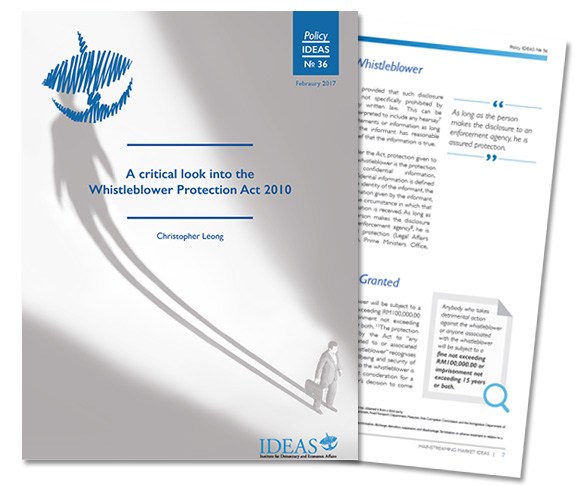
Policy Paper No 36 – A critical look into the Whistleblower Protection Act 2010

Policy Paper No 36

A critical look into the Whistleblower Protection Act 2010

Author: Christopher Leong

Despite the introduction of the Whistleblower Protection Act 2010 (the Act), whistleblowing is still a rare occurrence in Malaysia. In fact, the annual report from the Malaysian Anti-Corruption Commission (MACC) in 2012 indicates that out of a total of 8,953 complaints received by the Commission only 28 were from whistleblowers. However, data from the US suggests that as a method of detection whistleblowing is the single most effective means of uncovering graft. Considering the importance of whistleblowers in discovering cases of fraud the low number of whistleblowers as observed through the MACC statistics suggest that whistleblowers in Malaysia remain hesitant.

In order to encourage more individuals to come forward and whistleblow, there must be several changes made to Whistleblower Protection Act 2010. To achieve this, the following three areas need to be reformed under the Act:

  • Protection for Whistleblowers – the level of protection for whistleblowers needs to be improved and reinforced.
  • Independence of the Act – the Act still remains vulnerable to Ministerial action and it needs to be made entirely independent of such influence.
  • Whistleblowing Mechanism – a more comprehensive whistleblowing mechanism needs to be created – one that is more robust than the current model.
DOWNLOAD
DOWNLOAD
Share

Related posts

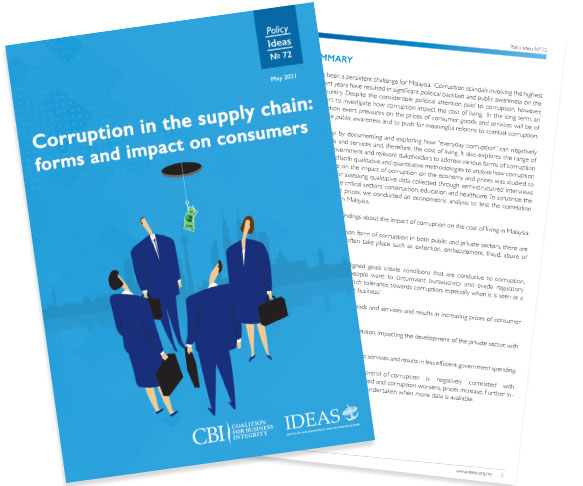
June 22, 2021

Corruption in the supply chain: forms and impact on consumers


Read more
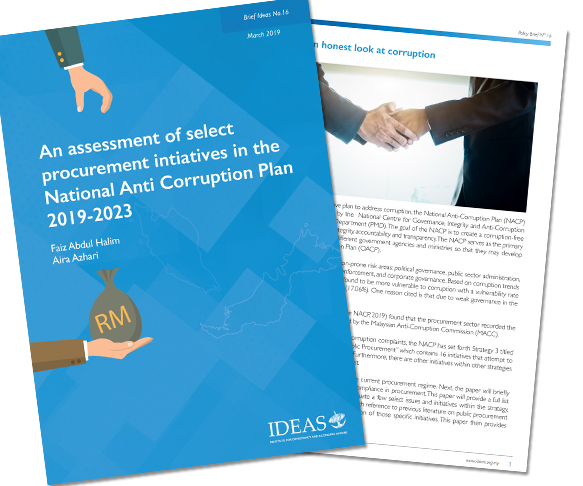
March 14, 2019

Brief IDEAS No 16 – An assessment of select procurement initiatives in the National Anti Corruption Plan 2019-2023


Read more
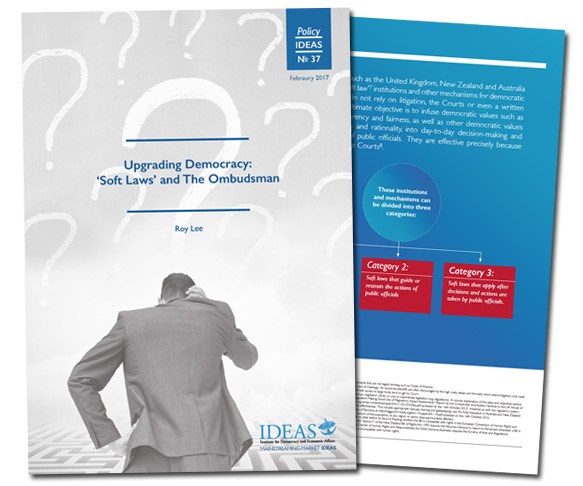
February 27, 2017

Policy Paper No 37 – Upgrading Democracy: ‘Soft Laws’ and The Ombudsman


Read more

Follow Us

Contact Us

  • +603 – 2070 8881 / 8882
  • +603 – 2070 8883
  • admin@ideas.org.my

Sign up for our newsletter

© Copyright - 2025 | ideas.org.my | Institute for Democracy and Economic Affairs (IDEAS)